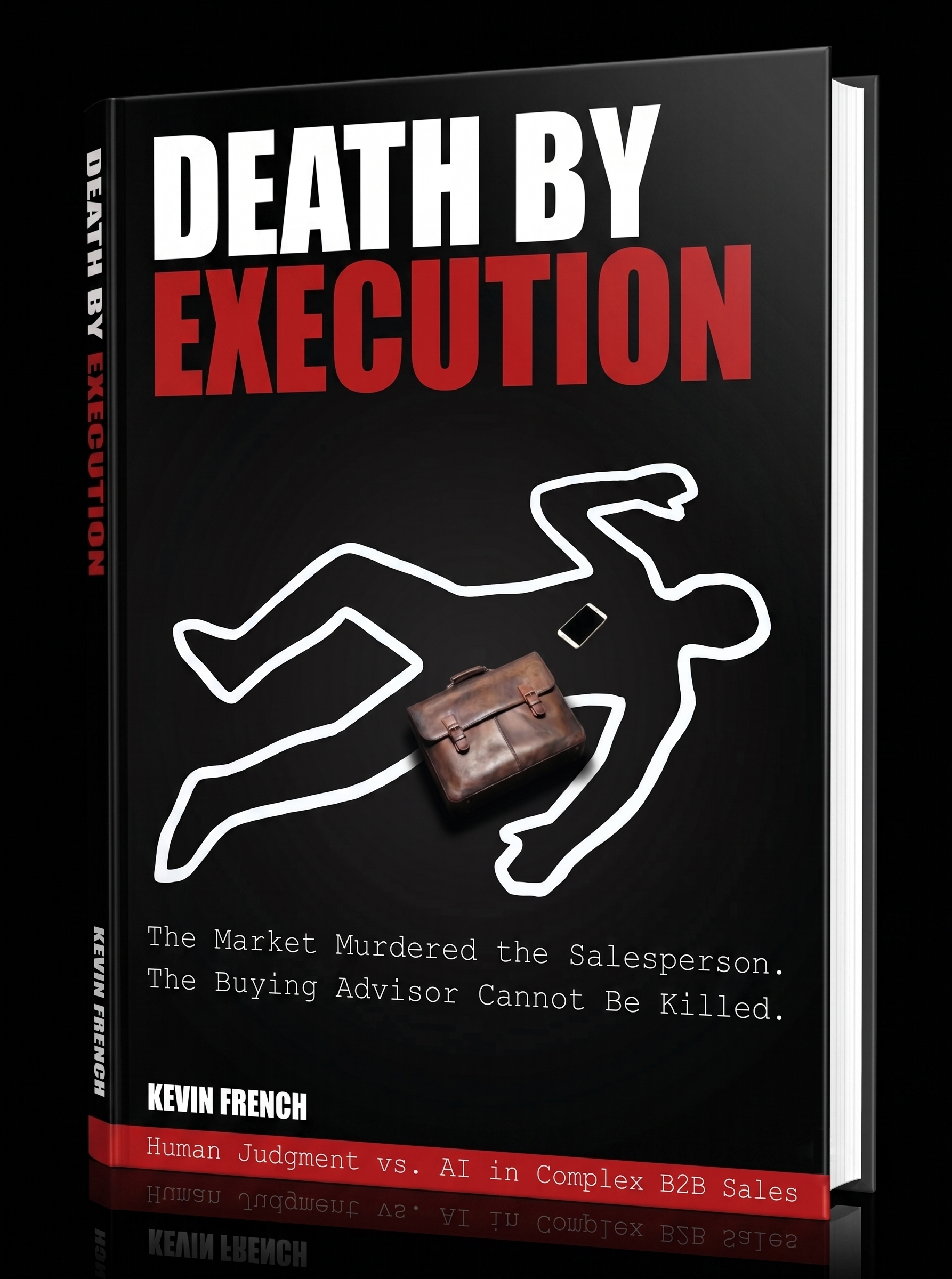
There is a third stage of business evolution that nobody in consulting or academia has named yet. Every advisory firm has a financial incentive to call transformation the destination. It is not.
When the foundational premise of an industry's revenue model inverts, every strategy, methodology, and commercial structure built on that premise collapses. Not slowly. All at once. The difference between transformation and inversion is not one of degree. It is a difference in kind - and the response required is categorically different.
Read the Inversion Framework →The consulting industry has a financial incentive to call transformation the destination. It is not. There is a third stage - structurally different in kind, not degree - that occurs when the foundational premise of an industry's revenue model inverts. When this happens, transformation strategies don't need updating. They need to be abandoned.
One engagement puts me inside your business as an operator, owning the number and running the commercial motion. The other diagnoses whether your commercial model is viable at all - and builds the architecture for what replaces it. The right engagement depends on which problem you actually have.
When the foundational premise of an industry inverts, every structure built on that premise collapses. Not slowly. All at once. Judgment is the only thing left that compounds.
The thesis across all three books
Each book examines the same disruption from a distinct vantage point. They are designed to be read independently and understood together.
"Every time the market shifted underneath me, I found a way to build revenue anyway. That wasn't resilience. That was pattern recognition."
An ISP and digital agency founded at the inflection point of internet adoption. A fitness equipment manufacturer taken from near zero to exit in under two years through e-commerce only. A SaaS company led through acquisition at $200M. Three industries. Three market dislocations. The commercial architecture required to build through disruption is what this work is built on.
These are not principles or best practices. They are observable laws of buyer behavior - the governing physics underneath every B2B sale.
The harder you push, the more buyers resist. Pull back, they lean in. Every methodology built on force is fighting physics.
The buyer who owns the math of their own failure closes themselves. Your job is diagnosis, not persuasion.
Activity metrics measure motion. Agreement metrics measure progress. Most pipelines are full of conversations that commit to nothing.
Every methodology built before 2015 was designed for a world where sellers controlled information. That world ended. Running an old playbook doesn't underperform - it actively creates resistance.
No deck. No demo. If the problem is something other than commercial architecture, that's the answer you'll leave with.
72-hr diagnostic · All engagements confidential